Jul 4, 2010

So Good: The Ex + Brass Unbound UK Tour 2010


UK Tour * February 2010

A selection of reviews from the tour
Glasgow | Birmingham | London | Manchester | Liverpool

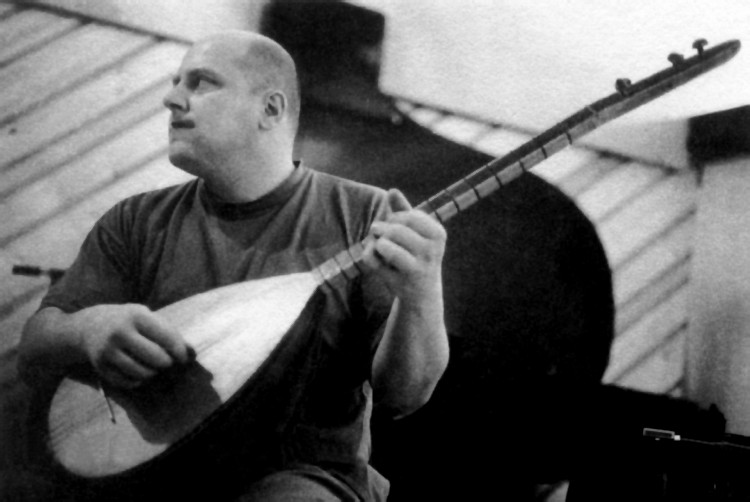
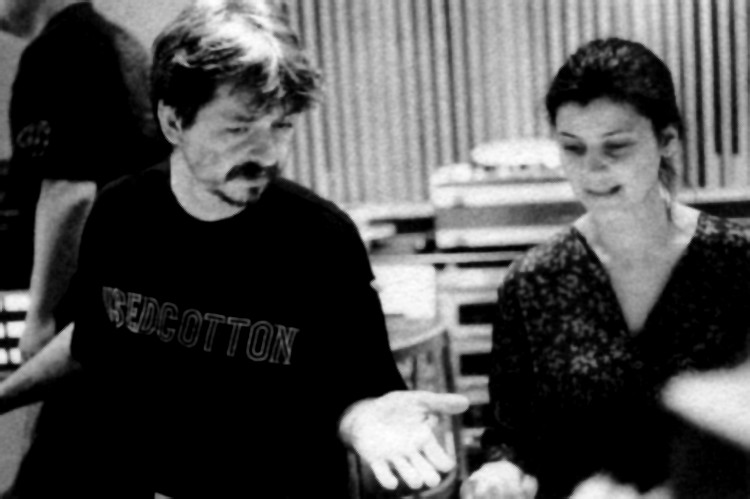
Here is extract from the Ethiopia Tour, in addis abeba, with Getatchew Mekuri, 2007


Support Them and buy their records! >>>> www.theex.nl <<<<

You can read a first post about The Ex & Tom Cora


Vladimír Václavek & Iva Bittová: Bílé inferno - White Inferno (1997)


Iva Bittov?? & Vladim?�r V??clavek: 1997 White Inferno - B?�l?�
 Inverno (Cover Back)Iva Bittov?? & Vladim?�r V??clavek: 1997 White Inferno - B?�l?�
 Inverno (Cover Front)
Iva Bittová & Vladimír Václavek: 1997 White Inferno - Bílé 
Inverno (Cover Booklet 4)Iva Bittová & Vladimír Václavek: 1997 White Inferno - Bílé 
Inverno (Cover Booklet 3)
Tom Cora, Iva Bittová, and Vladimír Václavek in booklet
Indies Scope Records MAM055-2 | 1997 | Selected APE | 168 MB
Genre: avant-pop, folk, etno, postrock, czech language
Czech singer/violinist Iva Bittová and guitarist Vladimír Václavek join forces in a sparse exploration of voice and sound. Joined occasionally by Tom Cora on cello, Frantisek Kucera on trumpet, or children's sing-song voices, this is primarily duets both stark and expressive.

After a few years passed collaborating with drummer Pavel Fajt, Iva Bittová teamed up with Rale guitarist Vladimír Václavek to write and record the beautiful two-CD set Bílé Inferno (White Inferno). The singer remains true to her stripped-down aesthetics, keeping arrangements sparse, letting the songs show their power with as little embellishments as possible. Václavek's acoustic guitar and vocals are often enough to accompany Bittová's sensual (and very creative) vocals and violin playing. Tom Cora may add a bit of cello, Frantisek Kucera a touch of trumpet, or children some singalong lines. The songs are long, repetitive in a way similar to nursery rhymes. The mood is kept quiet, Bittová often whispering in our ears the words of lyricist Bohuslav Reynek. The childlike playfulness of "Kdoule" and "Moucha," the more defiant "Vzpominka," the overdubbed vocals at the end of "Zvon" -- all constitute highlights. Each song seems to be the result of a labor of love between the two protagonists, no detail having been left to chance. And yet, spontaneity permeates the album, mostly thanks to Bittová's many groans, shouts, yelps, and other strange exclamations and techniques she derives from Eastern European cultures and the playground. For a double album, Bílé Inferno is short. The total duration of 77 minutes and 14 seconds would have fit on a single CD, but -- and even though the price of this Czech import gets beefed up because of the two-CD status -- the idea to split the set in two works wonderfully. Listened to as one big chunk, Bílé Inferno would sound a bit linear, become tiresome, and lose part of its appeal. Taken in two helpings, it is one stunning piece of art. The label Indies made up for the short duration with lavish artwork and photographs. This is the Iva Bittová record, timeless and essential to any fan of Czech alternative pop/rock.

Jul 1, 2010

Sound Design: Raymond Scott - Soothing Sounds for baby (1963)


Raymond Scott (born Harry Warnow, 10 September 1908 — 8 February 1994),was an American composer, band leader, pianist, engineer, recording studio maverick, and electronic instrument inventor. He was born in Brooklyn to a family of Russian-Jewish immigrants. His older brother, Mark Warnow, a conductor, violinist, and musical director for the CBS radio program Your Hit Parade, encouraged his musical career. Though Scott never scored cartoon soundtracks, his music is familiar to millions because of its adaptation by Carl Stalling in over 120 classic Bugs Bunny, Porky Pig, Daffy Duck and other Warner Bros. Looney Tunes and Merrie Melodies animated features. Scott's melodies have also been heard in twelve Ren & Stimpy episodes (which used the original Scott recordings), while making cameos in The Simpsons, Duckman, Animaniacs, The Oblongs, and Batfink. The only music Scott actually composed to accompany animation were three 20-second electronic commercial jingles for County Fair Bread in 1962.

Despite its title, Soothing Sounds for Baby isn't just for infants. When it was recorded, it was intended for babies -- but history has endowed this deceptively simple work with a broader significance. Had Scott known that this elemental music's appeal would continue as its target audience grew up, he might have entitled the series Sophisticated Sounds for Baby...


- - Released on three long-playing records in conjunction with the Gesell Institute of Child Development, Inc., Soothing Sounds... was intended to serve as an "aural toy" during the "feeding, teething, play, sleep and fretful periods" of infants in three distinct age groups. The original album notes stressed that a young child's sense of hearing is better developed than many people realize. Besides soothing infants, these recordings were intended to be "pleasantly stimulating." Babies like "new sights and new sounds," explained a booklet slipped inside the LPs. Music consists of vibrations, which babies also like -- "just vibrate baby's bed gently," the booklet noted, and "crying often stops." By approximating "the rhythmic tinkle of a music box" and "a ticking watch held close to [the] ear," Soothing Sounds for Baby provided a "quieting" atmosphere of relaxation, warmth, and contentment. 

(1963) Soothing Sounds For Baby Vol. 1 (0 - 6 Months)
Raymond Scott - (1963) 
Soothing Sounds For Baby Vol. 1 (0 - 6 Months)
(1963) Soothing Sounds For Baby Vol. 2 (6 - 12 Months)Raymond Scott - (1963) 
Soothing Sounds For Baby Vol. 2 (6 - 12 Months)
(1963) Soothing Sounds For Baby Vol. 3 (12 - 18 Months)Raymond Scott - (1963) 
Soothing Sounds For Baby Vol. 3 (12 - 18 Months)

So Relax. Listen closely, as a baby Or don't. In a world fraught with tension and insecurity, we trust you'll find Raymond Scott's gentle melodies and childlike rhythms to be soothing companions.

/link in covers/

Jun 29, 2010

Digital Hardcore: Shizuo VS. Shizor (DHR LP 7 - 1997)

Country: Berlin, Germany
Style: Breaks, Noise, Breakcore, Experimental
Format: Mp3
CBR: 44.1Khz, 320kbps.

Ugly underground cover for a fantastic old school record. Shizuo was the Digital Hardcore Recordings manifestation of David Hammer (born in 1973, in Berlin), with occasional vocals and an animated stage show by Annika Trost. Their 1997 album Shizuo Vs. Shizor wowed critics with its giddy, crazy blend of punk rock electronics. During the popularity with Shizuo's music, David also started a band with Annika and Razi Barakat called Give Up (Razi had earlier been featured on The Cramps cover song "New Kick"), but the band later broke up after the 1997 DHR tour due David's heavy usage of LSD, as a serious disagreement with creative differences led to David legitamely attacking Razi half way through their set.[citation needed] The two would never collaborate again, as both were interviewed about the incident in the short lived DHR fanzine.
Hammer's last release under the Shizuo alias was with the self released vinyl Shizuo No.1 in 2000. He was last seen playing guitar in a Berlin based band called The Nothings. Trost now performs solo or with Cobra Killer. One of the best of my breakcore' classics. Where are you Shizuo?

/link in cover/

Jun 26, 2010

DRUMS: Dylan Elise


 Dylan Elise performing at the Tauranga National Jazz Festival in New Zealand
Some parts are close to noise or digital speedcore. Amazing High beats & improvisation
Wish you good luck for midi programmation josh ;)

The Summer is Now: Wevie Stonder - Eat your own Ears (1999)

Open your window, and listen to this. Bricolage, Collage, all in a funny way and reactive melodies. close to stock hausen and walkman, but not so. One of my classic collage pop again.


/link in cover/

Jun 22, 2010

Nomex Live at Datacide + Cagliostro Soliparty Berlin 14.05.2010


"Those works created from solitude and from pure and authentic creative impulses - where the worries of competition, acclaim and social promotion do not interfere - are, because of these very facts, more precious than the productions of professionals. After a certain familiarity with these flourishings of an exalted feverishness, lived so fully and so intensely by their authors, we cannot avoid the feeling that in relation to these works, cultural art in its entirety appears to be the game of a futile society, a fallacious parade." - Jean Dubuffet.

Jun 9, 2010

Fine Tuning: Future Is Not What It Used To Be - Erkki Kurenniemi


erkki kurenniemi - ÏÅnityksiÅ 1963-1973


The most ambitious of Erkki Kurenniemi's projects was the series of digital synthesizers, called DIMI, in the early 1970s. For example, Kurenniemi's video synthesizer DIMI-O (1970-1971) converted any movements recorded by the video camera into real-time sounds and music. DIMI-S (also known as the "Sexophone") was able to generate sound and light by contact with the skin, reacting to the emotional state of the performers. Kurenniemi created the first commercially manufactured and marketed microcomputer in 1973, two years before the American MITS Altair 8800. Nowadays many of the Kurenniemi-created instruments are in the possession of Swedish collector Ralph Lundsten, the owner of Andromeda electronic studio.


Dimi-S Schematic 
Mika Taanila has directed a documentary film on Him. The title is "The Future Is Not What it Used To Be", premiere November 2002, and it is accompanied by a compilation of Kurenniemi's previously unpublished electronic compositions from the 1960s on Love Records. A DVD version (June 2003) entitled The Dawn of DIMI contains the documentary, plus Kurenniemi's various short films and animations and concert footage from the early 70s.

Extract from the dvd Erkki Kurenniemi -- The Dawn of Dimi DVD (2002)

 Here is an extract from Pan Sonic + Carl Michael von Hausswolff + Erkki Kurenniemi -- live @ Kiasma theatre, Helsinki, Finland 21-10-2002. 
or "how to be payed 3000$ in a museum to play with a microwave"
/link in cover/

Jun 5, 2010

Mouse On Mars - Instrumental LP (1997) & Live Session


Mouse On Mars. I used to love and listen that band so much in the 90's. Various differents post-dance-no-style-electronic-noise-experiments, from pure ambiant, gliches, noise to ultrabeats, always in personal approach, and nevertheless "musical" way. Totally in accords to my listenings of guys like squarepusher evolution, Oval, Aphex, Bogdan, wabi Sabi or Stock, Hausen & Walkman at the same times., far from my Noise listenings. When experiments in electronic music was a school to follow, not making claim to distinction. Some tracks were really part of my life playlist, and keep on. Some of  the Instrumental Lp. Take it here

St. Werner and Toma are childhood friends who were born on the same day, in the same hospital. Their first album, Vulvaland, was released in 1994 on the british record label Too Pure. This is considered their "straightest" and most focused album, mixing ambient and techno. Their second album, Iaora Tahit, has a much more playful feel and encompasses a wider variety of electronic dance genres. Read more

Extract from a liveshow in 2000. A blast compared now to the (now) laptop Era. Something to ear, to see, to feel. Improvised and remixed.


If u liked this or knew from them already, i suggest you to listen to that live recording here did in 2000. Different approach of some hits, with bass, drum and electronics, really close to their peel session. Nothing compared to what they do now, unfortunatly..

More info:

Jun 2, 2010

Automatic String quartet , by Frank Pahl


Four ukuleles, one toy organ and minimal percussion provide the rhythm and ambience for a Brian Eno inspired composition. The quartet is sequenced by a microcontroller and triggered by the opening of the score (a mercury switch is embedded on the first page of the score). I believe the motors are 60 rpm, hence the tempo.

For more, visit playgallery.org, UM School of Art & Design's gallery for time-based work.

May 31, 2010

TV from the late 80s: Christian Marclay on Night Music


I guess nothing to compare to our today-streamed-extra-HD-16/9-super-mega-pixelled-&-digitally-surrounded-8:1 TV programs, French tv music pre-dead dinosaurs guests & M(arketing)TV gagaz, Cold play posers or greenday clones. Technical progress is something. Ethics would have been able to be the key. Or when the passion is swallowed by a market.

Following, an interresting french interview of Marclay, during the french  "Mange Ta Ville" (Eat Your Town) festival. Talking about "The Sounds of Christmas",an  interactive sound installation, where Marclay invited some local djs and friends to remix about 1500 christmas songs old vynils on turntables.


For more, you can check a first post ive made about him here
cheers 

May 25, 2010

Sound design: The Sound Of Rain

Zimoun : 97 polysiloxane hoses 3.0mm, compressed air, 2010 on Vimeo.

A way to think how to make sounds with puredata. How a rain sound, or fire synthesis , is made of different frequencies & elements.

Check here to know more about it on obiwannabe.co.uk
Also great explanations about fire synthesis here
cheers,

May 19, 2010

Sound Design: Andre Michelle


Starting 1998 in Flash 4 as an autodidact, Andre Michelle repeatedly pushed the limits of Flash possibilities.
I've discovered him when he used to work on Audiotool 1.0, an online music application entirely developped in Flash.
Click to create at least two circles.
Listen to the tunes they make.
Press Space to clear them all.
 A 3D Sound-visualizer based on research byPaul bourke and the wonderful music by Alva Noto & Opiate.
Simple sinewave synthesizer triggered by an ordinary 16step sequencer. Each triggered step causes a force on the underlaying wave-map, which makes it more cute.


 If you wanna get more or source codes, please check his website

May 5, 2010

Monsieur Deleuze: L'Abécédaire (1996)


The eight-hour series of interviews between Gilles Deleuze and Claire Parnet, filmed by Pierre-André Boutang in 1988-1989. The individual episodes are "A comme Animal," "B comme Boisson," "C comme Culture," "D comme Désir," "E comme Enfance," "F comme Fidélité," "G comme Gauche," "H comme Histoire de la philosophie", "I comme Idée, "J comme Joie", "K comme Kant", "L comme Literature,"M comme Maladie,"N comme Neurologie", "O comme Opéra", "P comme Professeur", "Q comme question," "R comme Résistance", "S comme Style","T comme Tennis","U comme Un", "V comme Voyage", "W comme Wittgenstein, "X & Y comme inconnues," "Z comme Zigzag"   PART II

Apr 21, 2010

Soundtrack: Lost Highway (1997)

With David Lynch serving as executive producer, we get one of the finest soundtracks ever put together. The soundtrack opens with David Bowie performing "I'm Deranged" (which the film's credits opened up to), and while it may sound a little techno (compliments to Brian Eno), it is still Bowie, and this song helps to forever cement him as the king of cool. Nine inch nails's "Perfect Drug" fits the tone of the film like a glove, just try to resist the urge to sing along with the catchy chorus. The Smashing Pumpkins' mournful-esque "Eye", which may be one of they're best songs. Lou Reed's rendition of "This Magic Moment" is a tad disturbing, while Marilyn Manson contributes "Apple of Sodom" and an excellent rendition of Screaming Jay Hawkins' "I Put a Spell On You", and we also get a few selections of barry adamson's grooves, all of which are sandwiched between orchestral compositions from Angelo Badalamenti. A must have for the fans of the film.

/link in cover/